
 Academy

The 8 guarantees of this wax
 Présentation pratique
 Cire naturelle d’origine apicole
 Origine européenne
 Non blanchie
 Présentation pratique en pastilles
 Carton professionnel de 20 kg
 Non désodorisée
 Teinte ambrée naturelle
What is yellow beeswax used for?
Yellow beeswax is used to make candles that retain the amber tint and natural odor of this material. It constitutes a basis for creations whose identity is based on the appearance of the wax of beekeeping origin, without seeking to erase its characteristics.
This beeswax for candle is aimed at candle makers and brands that develop this type of collection. It can also be considered to provide consistency to balms, sticks or maintenance products, as well as for certain coatings, after validation of the formulation.
Its presentation in pellets simplifies the sampling of small quantities and the preparation of mixtures.
Key information about yellow beeswax
PRODUCT TYPE Natural wax of beekeeping origin
REFERENCE Yellow beeswax
MAIN APPLICATION Candles
SHAPE Pellets
ORIGIN European Union
PACKAGING 20 kg box
ADVERTISED COMPOSITION Natural wax of beekeeping origin
PUBLIC Candle makers and formulators
IMPLEMENTATION Progressive tests
VALIDATION Test according to final use
CONTROL Combustion and final result
OTHER USES ANNOUNCED Paper/cardboard coating; balms and sticks
Why choose this wax for candles?
TARGETED USE
Candles
This yellow beeswax is primarily selected for candles whose rendering enhances its amber tint and its natural scent. It can also be studied in several professional formulations.
The pellets format facilitates dosing, merging and organizing batches without having to split a block.
Pellet format
Weighing and preparation
WHAT THE FORMAT BRINGS: Weighing without cutting, sampling adapted to prototypes, progressive adjustment of quantities, organization of small production runs and regular production
POSITIONING
An unbleached and undeodorized raw wax, with its natural amber color and odor
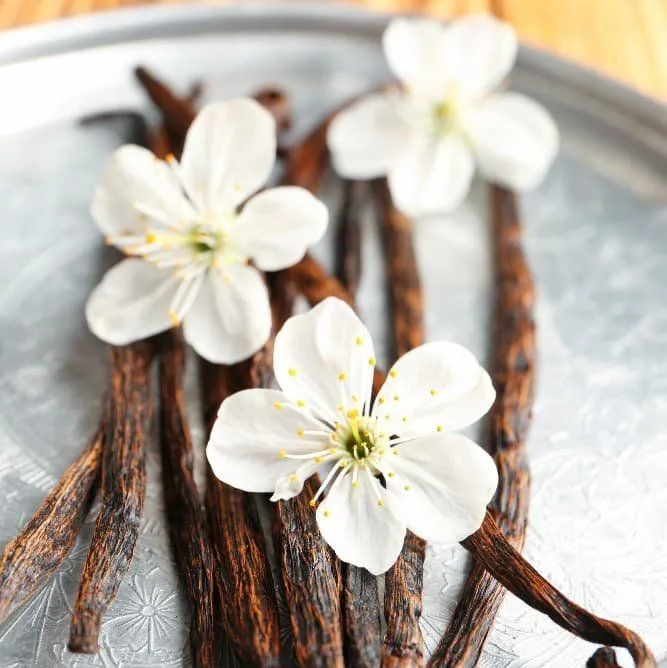
This raw, unbleached and undeodorized bee wax retains its yellow to amber color and its natural odor.
European origin
preserved natural characteristics and presentation in pellets for batch preparation.
Its color and smell are part of the rendering: test them with the fragrance, the pigments and the other components of the formula.
PROFESSIONAL FORMAT
20 kg box
The 20 kg carton is suitable for professionals planning prototypes, small production runs or regular productions.
Candle makers
Formulators of balms and sticks
Manufacturers of polishes and coatings
Workshops looking for raw bee wax
For what uses should yellow beeswax be used?
CANDLES
Moulded candles, pillars and pot candles
This wax is first used to make candles. In secondary uses, it can structure balms, sticks, polishes or coatings, provided that the formula, process and support actually used are checked.
Validate the visual appearance of the yellow wax in the finished product.
COSMETIC CARE
Balms, sticks and solid products
It may be of interest to formulators and manufacturers who are looking for a reference for natural wax of beekeeping origin in pellets to organize the dosage, fusion, mixing and control of their batches.
Keep the same components when comparing prototypes.
COATING
Coated paper and board
The secondary uses identified are: Paper/cardboard coating; balms and sticks. They require a protocol specific to the support and the final product.
Test the coating or balm on the actual support and in the formula.
TEXTILES AND CARE
Pre-waxed textiles and polishes
Check the compatibility of the components, the process temperatures, the appearance after cooling or drying, then the performance in use on a representative prototype.
Also check the final appearance linked to the natural color of the wax.
NOT RECOMMENDED
Massage candles without dedicated skin formula
A massage candle requires cutaneous qualification of the complete formula, beyond the sole choice of wax.
Check each ingredient and the application temperature.
NOT RECOMMENDED
Food packaging without food contact compliance
Packaging intended for contact with food requires a material and a process compliant with this use.
Do not accept this product without supporting documents suitable for food contact.
Is yellow beeswax suitable for your project?
✓ Choisissez ce produit si vous souhaitez
✓ You make moulded candles, pillars or container candles;
✓ You formulate balms, sticks and solid products;
✓ Your project involves coated paper and cardboard;
→ Ce n'est pas fait pour vous si
→ You wish to make a massage candle without a formula qualified for skin contact;
→ You make a package in contact with food without appropriate compliance;
→ You are looking exclusively for a wax of vegetable or mineral origin;
→ You cannot test the formula and, for a candle, its combustion in the final format;
How to use yellow beeswax?
1
Define the specifications loads
Specify the expected function of the wax, the support, the associated components, the process and the acceptance criteria for the finished product.
Incorporate the expected yellow rendering into the acceptance criteria.
2
Calculate the batch
Set a pilot batch size, weigh each material and record the quantities to ensure traceability of the test.
Identify each pilot batch and keep its complete formula.
3
Prepare the equipment
Use a tank, a scale, a thermometer and clean, dry tools compatible with the formulation.
Equipment clean, dry and compatible with the formulation.
4
Melt gradually
Melt the wax under control, without overheating, then maintain agitation suitable for the qualified process.
Follow the fusion without exceeding protocol parameters qualified.
5
Incorporate components
Add the other components in the order defined by the protocol and check the homogeneity of the mixture.
Add the components in the order defined for the test.
6
Apply or shape
Apply, pour or condition the formulation on the actual support, noting the batch parameters.
Apply the formula to its support or in its final packaging.
7
Cool and condition
Allow the product to stabilize under reproducible conditions before any inspection.
Compare the prototypes after stabilization carried out under constant conditions.
8
Validate the pilot batch
Evaluate the appearance, compatibility, hold and performance in use. Only launch production after validation of the criteria.
Validate the appearance, performance and use before any mass production.
What dosage should you use?
6 – 10 %
Plage de travail
For a first test of scented candle, work within a starting range of 6 to 10% of fragrance on the mass of wax. Start at the lower limit, then adjust after diffusion and combustion tests, without exceeding the wax's own capacity or the fragrance's IFRA/CLP limit.
Calculateur de dosage
Parfum0 g
Base0 g
The 7 factors that affect dosage
Nature of the wax The capacity to retain and restore the fragrance varies depending on wax composition and batch.
Type of creation Container, molding, fondant or decoration do not always require the same load scented.
Selected fragrance Its concentration, its volatility and its compatibility modify the useful dosage.
IFRA and CLP limits The regulatory ceiling of the fragrance may be lower than the working range of the wax.
Incorporation temperature An unsuitable temperature can reduce the retention or prevent homogeneous distribution.
Mixing and curing time Good homogenization and sufficient rest determine diffusion.
Wick and combustion Any variation in dosage must be validated by a complete combustion test.
Yellow beeswax or another wax: how to choose?
Critère
Yellow beeswax
Wax for containers
Casting wax
Main use
Candles
Candle in container
Moulded candle
Function
Raw wax · amber color · natural odor
Base of container candle
Freestanding base
Selection criterion
Formulation compatibility
Containing compatibility
Holding and unmolding
Priority control
Performance on support
Appearance and burning
Details and burning
Support
Matrix or real surface
Pot or container
Mold
Validation
Formula + process + support
Formula + container + wick
Mold + formula + wick
How to choose a wax for candles?
Choose according to end use
Yellow beeswax is suitable when the amber tint and natural odor of the material can contribute to the character of the product. It can be used in a candle, a balm, a stick or a polish, provided that the formula is adapted to each use.
Choose according to the fragrance and the components
Fragrance, the coloring and fatty substances can modify the odor, color and consistency of this beeswax. Test the ingredients in the formula actually sold and check their balance with the naturalness of the material. For a candle, add the wick and the final format to this validation.
Choose according to the product finished
Validate this wax in the product actually sold. For a candle, check the molding or container, wick, fragrance and combustion; for a balm or polish, observe the texture, application and rendering on the support. Each use requires its own test, even with the same batch of wax.
Choose according to production
The pellets format is weighed without cutting and allows you to easily adjust the quantity necessary for a test, then for production. The 20 kg box is especially suitable for a workshop that uses this product regularly. Before ordering, compare this volume to the actual consumption per batch and the space available for storage.
Packaging and storage
The yellow beeswax is available in a 20 kg carton. This professional format facilitates the preparation of needs for planned production or several batches.
After each use, close the packaging to protect the wax from dust, humidity, odors and any cross-contamination.
Store the wax:
✓ In its correctly closed original packaging;
✓ In a clean, dry and organized room;
✓ Protected from humidity and splashes;
✓ Away from a direct source of heat;
✓ At a temperature as stable as possible;
✓ Far from strong odors and incompatible materials.
Certifications and regulatory information
Yellow beeswax is advertised as a natural wax of beekeeping origin, presented in pellets. Its declared origin is: European Union.
The product information must be included without extrapolation and checked on the lot or offer actually ordered.
The commercial information available for this product indicates:
✓ Origin announced: European Union;
✓ Main application: Candles;
✓ Composition announced: natural wax of beekeeping origin;
✓ GMO status: Non-status claimed;
✓ Status or positioning: European Union;
✓ Certification: Not claimed;
✓ Regulatory framework: Qualification according to the application;
✓ Packaging: 20 kg box.
The conformity of the finished product remains the responsibility of the manufacturer or formulator. It depends on all the components, the process, the support, the labeling, the claims and the final use.
Material for candles, balms and sticks
SUITABLE BALANCE
Weighing of the materials
Secures the proportions of the pilot batch and repeatability.
COMPATIBLE TANKControlled melting
Allows the wax to be melted without contaminating the mixture.
THERMOMETERProcess monitoring
Helps record melting, incorporation and application temperatures.
AGITATIONHomogeneous mixture
Promotes distribution regularity of the components.
REAL SUPPORTApplication test
Allows you to check adhesion, appearance and performance.
PROTECTIVE EQUIPMENTOrganization of the workshop
To be selected according to the process and the other materials used.
LOT SHEET INTERNALTraceability
Records weighings, parameters, observations and validation decisions.
COMPARATIVE WAXESMaterial selection
Allows flexibility, hardness, rendering and compatibility to be compared.
Frequently asked questions about yellow beeswax
This FAQ answers questions specific to unbleached and non-deodorized yellow beeswax: beekeeping origin of its color, presence of its natural odor, choice of colors and fragrances, candles, cosmetic products, polishes and coating.
This wax secreted by worker bees to build the alveoli is not bleached. It retains the color naturally associated with beehive products; pigments linked to pollen and propolis can contribute to its yellow or amber tint.
The yellow wax retains its natural amber tint and odor, while the white wax provides a lighter base and olfactory profile attenuated. The choice therefore depends on the visual appearance and the place that the material must take in the finished product.
A natural odor may remain perceptible since the wax is not deodorized. Its intensity varies with the formula and must be assessed on the final product, without promising fragrance identical honey from one batch to another.
Yes, the yellow base can warm or nuance the resulting color. It is particularly suitable for warm tones and creations left natural; for a precise shade, carry out a test after cooling.
Yes, with a fragrance intended for candles and compatible with the formula. The fragrance chosen must match the natural scent of the wax, then be evaluated on the cold candle and during combustion.
The candle is its main advertised use, but the reference is not classified as a wax Pilar or Specialized Container. Validate each format with the mold or pot, the wick, the fragrance and the formula actually selected.
Balms, sticks, lipsticks and other cosmetic preparations can use wax as a consistency ingredient. Its natural color and odor must be integrated into the formula, the conformity of which remains to be qualified for commercial use.
Yes, this type of combination can be studied with jojoba oil, another vegetable oil or shea butter. The proportion, texture and stability, however, depend on each ingredient and are determined on the balm or the complete stick.
Polishes and certain maintenance products are among the uses announced. It can be studied for waxing then polishing wooden furniture or parquet flooring, with a protective finish and a shine to be verified on the actual support.
The coating of paper and cardboard is one of the applications announced. The deposition, adhesion and protective appearance must be evaluated on the actual support in order to adapt the formula to the expected result.
No. It is a natural material from beekeeping and produced by bees in the hive. It is therefore of beekeeping origin, and not vegetable, even if it can be associated with vegetable oils or butters.
Start by validating a prototype with the available batch, in particular its color and smell. The wax is delivered in pellets in a 20 kg box; then calculate the need based on actual consumption and the planned production volume.