

 Academy
The 10 guarantees of this dye
 Compatible avec les cires pour bougies
 Répartition homogène dans la cire
 Dosage indicatif de 0,1 à 0,2 %
 Pesée et dosage facilités
 Présentation pratique en grains
 Sachet professionnel de 1 kg
 Colorant solide
 Intensité ajustable par paliers
 Teinte contrôlable après refroidissement
 Teinte Orange
What is the orange dye in grains for candles used for?
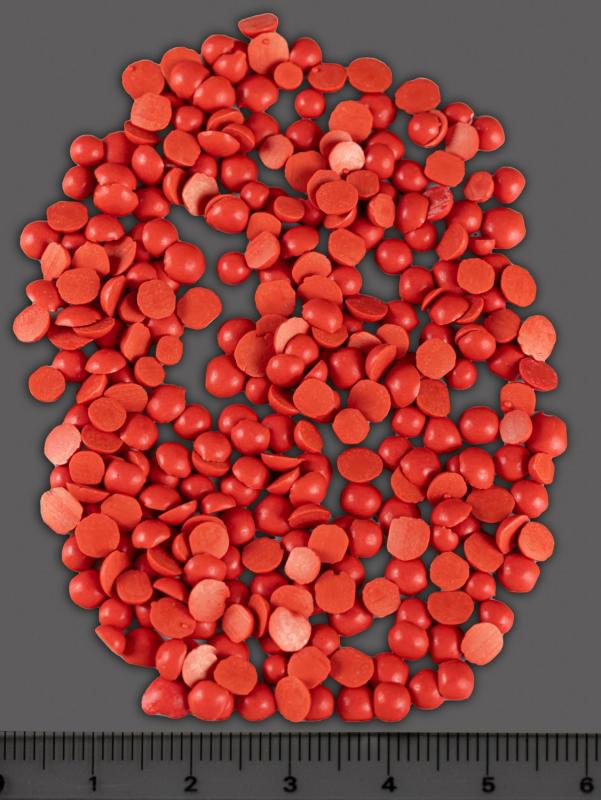
Our orange granular candle dye is used to tint the wax and give a warm color to the creations. It allows you to vary the intensity of the orange, for a soft or more vivid presentation, in accordance with the fragrance and the universe of the model.
This candle wax dye accompanies candle makers, brands and manufacturers of decorative collections. It is suitable for permanent ranges, seasonal creations and personalized series which seek a color evoking warmth or vitality in their presentation.
The solid format facilitates the sampling and weighing of the necessary quantities.
Key information about orange coloring
PRODUCT Candle coloring
TINTE Orange
SHAPE Solid grains
PACKAGING 1 kg bag
INDICATIVE DOSAGE 0.1 to 3% of the weight of wax
CONTROL Cold tint
MAIN APPLICATION Coloured candles
COMPATIBILITY Waxes for candles
IMPLEMENTATION Progressive and homogeneous incorporation
VALIDATION Color and combustion
TRACABILITY Recipe and batch identified
PUBLIC Artisans, brands and manufacturers
Why choose this dye for candle wax?
CONTROLLED DOSING
Gradual shade adjustment
Progressive dosage helps build the desired shade.
Additions by small increments
Easy to follow corrections
Tip: weigh and note each addition.
REPRODUCTIBLE RECIPE
Proportions recorded for each test
Weighing facilitates the reproduction of the chosen shade.
Easy to compare variants
Recipe kept from one batch to another
Tip: use the same protocol for each test.
COLD CONTROL
Reading the final color
Cold control allows you to choose the final color.
Shade observed after cooling
Difference with hot wax identified
Tip: compare under constant lighting.
FULL VALIDATION
Color and combustion controlled
The validation concerns finished candle.
Agreement with wax and fragrance
Behavior with the intended wick
Tip: validate the finished candle.
For what uses should you use the orange dye?
CONTAINER CANDLES
Coloured candles pot castings
The shade must remain consistent with the wax and the other components of the formula.
PLEASE REMEMBER: check the cold rendering.
MOLDED CANDLES
Coloured candles to unmold
The color is evaluated with the geometry and the cooling conditions planned.
THINGS TO REMEMBER: check the surface and unmolding.
PERFUMED FONDANTS
Colored fondants and pebbles
Fragrance can change the perception of color and should be incorporated into the test.
THINGS TO REMEMBER: test the complete formula.
SHADE BLENDS
Candles with personalized shades
Each shade must be weighed separately before being combined.
PLEASE REMEMBER: keep all the proportions.
NOT RECOMMENDED
Soaps and cosmetic products
This dye is formulated for candle wax and should not be used in soaps or cosmetic products without dedicated qualification.
Choose a dye intended for the skin use in question.
NOT RECOMMENDED
Food applications
This product is not intended to color foodstuffs or food preparations.
Use a dye with the grade and conformity required for food.
Is this orange dye suitable for your project?
✓ Choisissez ce produit si vous souhaitez
✓ You want to color a container candle orange;
✓ You wish color a moulded candle, a pillar or a decorative subject in orange;
✓ You wish to color fondants or scented pebbles orange;
→ Ce n'est pas fait pour vous si
→ You are looking for another color or another shade of orange;
→ You need a liquid dye;
→ You want to color a soap, a cream, a balm or a massage candle;
→ You want to color a food preparation;
How to use orange grain dye?
1
Define the target shade
Set a shade target and intensity level before preparing the tests.
Tip: keep a reference sample.
2
Weigh the wax and dye
Weigh the wax and the dye separately to keep a workable recipe.
Tip: record all masses.
3
Melt the wax according to its protocol
Prepare the wax according to a constant protocol adapted to the chosen reference.
Tip: avoid variations between tests.
4
Incorporate the grains at the appropriate temperature
Incorporate the dye gradually in order to adjust the shade without overdosing.
Tip: advance by small increments.
5
Mix until homogeneous
Mix regularly until you obtain a visually homogeneous dispersion.
Tip: keep the same mixing time.
6
Cast a sample identified
Cast an identified sample under the conditions provided for production.
Tip: note the formula and batch.
7
Observe cold and test combustion
Let cool, observe the final color then carry out the combustion test.
Tip: judge the finished candle.
8
Validate before production
Repeat the recipe selected on a pilot batch before launching production.
Tip: validate the change of scale.
What dosage should you use?
0.1 – 0.2 %
Plage de travail
The dye is dosed onto the wax mass. Start at the lower terminal and increase by small increments, checking the color on cold wax before starting a series.
Calculateur de dosage
Parfum0 g
Base0 g
The 7 factors that affect dosage
Nature and color of the wax A white, yellow or translucent base modifies the shade obtained.
Format and dispersion The liquid or solid form and the quality of the mixture influence the homogeneity.
Sought intensity A pastel or strong shade does not require the same dosage.
Weighing accuracy Low percentages require a suitable balance and well-measured batches.
Incorporation temperature It must allow complete dispersion without degrading the other components.
Fragrance and additives Associated materials may modify the color and its stability.
Sample and combustion Validate the cold color then check the wick, the flame and the soot.
Liquid coloring, grain coloring or mixture: which to choose?
Critère
Liquid coloring
Coloring in granules
Good reflex
Dosage
Fine additions
Weighing of solids
Use a precise balance
Dispersion
Progressive mixing
Dissolution to qualify
Follow a constant protocol
Nuances
Easy to measure mixtures
Possible mixtures after tests
Note all the proportions
Small batches
Very practical
Possible with appropriate weighing
Prepare a batch control
Series
Reproducible liquid recipe
Reproducible solid recipe
Validate the change of scale
Final control
Color and combustion
Color and combustion
Compare after cooling
How to choose a candle dye?
Choose according to the desired shade
Start from the desired shade and carry out several dosages on a small quantity of wax. Compare the rendering hot, after cooling and under the lighting provided for the presentation of the product.
Choose according to the wax and the formula
Color may vary depending on wax, fragrance and other components. Always test the colorant in the final recipe to verify dispersion, homogeneity and burning behavior. Compare the rendering on a soy wax, a vegetable rapeseed wax, a beeswax or a paraffin with the fragrance and the wick provided.
Choose according to the grain format
The grain format must correspond to your weighing, dosing and incorporation method. Use a reproducible protocol to avoid color differences between two batches.
Choose according to production
For a series, record the exact dosage, the wax used, the fragrance, the incorporation temperature and the result obtained. Validate several copies before standardizing the recipe.
Packaging and storage
This dye is available in a 1 kg sachet.
Reseal the container after each use and keep a clear identification of the reference, the batch and the opening date.
Keep the coloring:
✓ In its correctly closed packaging
✓ In a dry space
✓ At a stable, moderate temperature
✓ Protected from light
✓ With the batch and opening date identified
✓ By linking each dosage to the corresponding tests
Certifications and regulatory information
The exact origin and composition must be confirmed for the batch sold.
Before any use, check:
✓ The identity of the reference and the lot
✓ Compatibility with the complete formula
✓ Dosage and rendering on the finished product
✓ The requirements applicable to the target market
✓ The justification of any allegation
✓ The labeling of the marketed product
The manufacturer remains responsible for testing and compliance of the finished product.
Equipment for coloring a candle wax
WEIGHING
Precision balance
Weigh the dye
FUSIONMelting container
Melt the wax
MONITORING THE PROCESSThermometer
Monitor the temperature
MIXINGSpatula or stirrer
Homogenize
PREPARATIONWeighing cup
Prepare the dose
COMPARISONTest molds or containers
Compare the tests
PACKAGINGBatch labels
Trace the recipes
COMBUSTIONWicks adapted
Test the combustion
Frequently asked questions about orange candle dye
These answers cover the main formulation points. They do not replace testing the wax, fragrance and wick of your project.
It is used to color a candle wax and to build a more or less intense orange shade. The final shade depends on the base, dosage and cooling. It allows you to make container candles or jars, moulded candles, food warmers and decorative creations. It is also suitable for testing natural candles based on beeswax, vegetable oil or stearin.
The guideline range is 0.1 to 3% of the wax weight. Start at the low level, weigh each addition and increase only after observing a cooled sample. On vegetable waxes, paraffin wax, palm wax or coconut wax, start with a small batch and allow to harden.
Incorporate the grains into the melted wax, then mix until evenly dissolved and dispersed. Adapt the temperature to the protocol of the wax used. Melted wax can be prepared in a bain-marie or in a wax melter, depending on its melting point and the candle-making protocol. After melting the wax, let the candle harden before lighting it.
A test on soy wax is possible, but compatibility and rendering must be checked on the exact wax reference. A naturally colored base can modify the orange. Also check the melting point, pigment dispersion and combustion on several cooled candles. For a soy wax candle, compare several grades of dye before production.
Yes, measured mixtures allow you to create a personalized shade. Keep the masses of each color so that you can reproduce the formula. With a natural wax, a stearin or a paraffin, weigh the pigments separately before incorporating them.
Yes. Certain fragrances color the base or cause the color to evolve upon rest. The control must therefore relate to the complete formula, after cooling and maturation. Compare the fragrances, essential oils and scents on several scented candles before setting the recipe.
Reduce the dosage or prepare a less concentrated batch control. Work with small, measured deviations rather than major corrections at the end of mixing. Make a batch control in a pot or mold, then let it harden before comparing.
Use the same wax, the same batch of components, precise weighing and an identical heating cycle. Also note the pouring temperature and the cooling time.
Hot wax often appears more transparent and darker. The final decision should be made on a cooled finished candle, under constant lighting.
A dosage that is too high or poor dispersion can disrupt the behavior of the candle. Always test the wick, weld pool and flame on the final formula. Observe the wick cotton, wax bath, smoke and burn time as the candle burns.
Keep it closed, in a dry place, away from heat and light. Identify the batch and the opening date.
This product is available in 1 kg bags. For a recurring need or a large volume, ADC Solution can study the appropriate packaging and logistics.