





 Academy
AVP, TCR and SP cotton wick sample pack
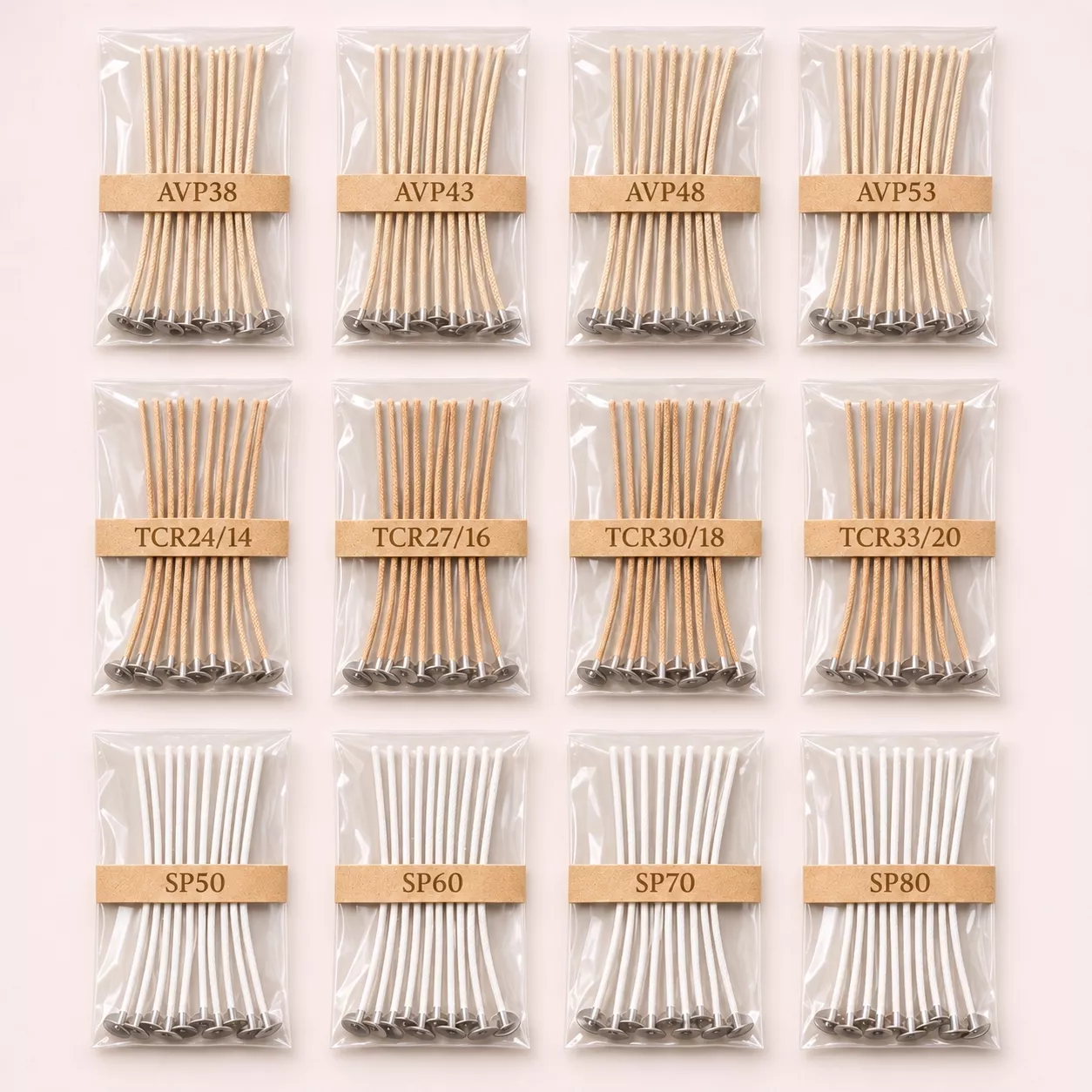
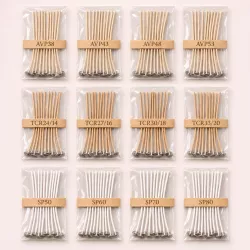
Compare 12 cotton wick references in a 12 cm length from the AVP, TCR and SP series. With 10 wicks per reference, you can test several sizes in the same formula and repeat your trials.
Pack highlights
- 3 series · AVP, TCR and SP
- 12 references · 12 cm
- 120 wicks in total
No minimum order
For orders containing discovery packs only.
Price per pack
Price:
€20.00
VAT excluded Any delivery charges are calculated at checkout
In stock
Pack contents
120 wicks in a 12 cm length. The pack contains 10 of each reference.
This pack helps you choose a cotton wick for a container candle or compare your current series with other references. It also provides a sample set when you work with several diameters or formulas.
| Samples included | Quantity |
|---|---|
| AVP · 38, 43, 48 and 53 | 40 wicks |
| TCR · 24/14, 27/16, 30/18 and 33/20 | 40 wicks |
| SP · 50, 60, 70 and 80 | 40 wicks |
Plan your tests
How should you choose between AVP, TCR and SP?
If you already use one of these series, start with your usual reference and compare it with one or two nearby sizes in the table. This isolates the effect of changing the reference before you try another series.
For a new formula, measure the internal diameter of the container and consult the ADC range to identify references to test. AVP, TCR and SP are different series. A number in one series does not directly correspond to a reference in another. Make your final choice from the test results in your candle.
What should you assess in your prototypes?
During testing, observe flame stability, melt pool development and any residues. Compare prototypes at equivalent stages. Record the wick reference, wax, container, fragrance and dye so you can identify the combination tested.
If you validate a wick in an unfragranced, uncoloured candle, confirm the result in your fragranced or coloured version. A wick suited to one formula may behave differently when you add fragrance or change the container.
How to organise your tests
1. Choose a control formula and measure the internal diameter of the container at the fill level.
2. Make a first series of prototypes, changing only the wick reference. Identify every candle before lighting it.
3. Compare prototypes using the same criteria. If two references perform similarly, repeat the test to compare consistency.
4. Keep some wicks of your chosen reference to validate the final formula or test another container format.
Frequently asked questions
Are all the wicks 12 cm long?
Yes. The pack contains twelve references in a 12 cm length, with ten wicks of each.
How does this differ from the wax packs?
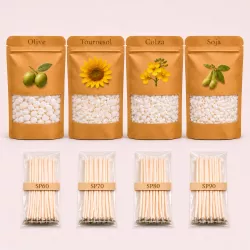
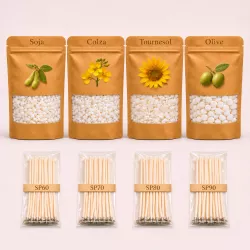
The wax packs include four SP references. The cotton wick pack lets you compare three series, with four references from each.
Is the diameter enough to choose a wick?
It helps you shortlist references. Confirm your choice with the wax, container and other ingredients in the finished candle.
Explore more at ADC
Pack contents
120 wicks in a 12 cm length. The pack contains 10 of each reference.
This pack helps you choose a cotton wick for a container candle or compare your current series with other references. It also provides a sample set when you work with several diameters or formulas.
| Samples included | Quantity |
|---|---|
| AVP · 38, 43, 48 and 53 | 40 wicks |
| TCR · 24/14, 27/16, 30/18 and 33/20 | 40 wicks |
| SP · 50, 60, 70 and 80 | 40 wicks |
How should you choose between AVP, TCR and SP?
If you already use one of these series, start with your usual reference and compare it with one or two nearby sizes in the table. This isolates the effect of changing the reference before you try another series.
For a new formula, measure the internal diameter of the container and consult the ADC range to identify references to test. AVP, TCR and SP are different series. A number in one series does not directly correspond to a reference in another. Make your final choice from the test results in your candle.
What should you assess in your prototypes?
During testing, observe flame stability, melt pool development and any residues. Compare prototypes at equivalent stages. Record the wick reference, wax, container, fragrance and dye so you can identify the combination tested.
If you validate a wick in an unfragranced, uncoloured candle, confirm the result in your fragranced or coloured version. A wick suited to one formula may behave differently when you add fragrance or change the container.
How to organise your tests
1. Choose a control formula and measure the internal diameter of the container at the fill level.
2. Make a first series of prototypes, changing only the wick reference. Identify every candle before lighting it.
3. Compare prototypes using the same criteria. If two references perform similarly, repeat the test to compare consistency.
4. Keep some wicks of your chosen reference to validate the final formula or test another container format.
Frequently asked questions
Are all the wicks 12 cm long?
Yes. The pack contains twelve references in a 12 cm length, with ten wicks of each.
How does this differ from the wax packs?
The wax packs include four SP references. The cotton wick pack lets you compare three series, with four references from each.
Is the diameter enough to choose a wick?
It helps you shortlist references. Confirm your choice with the wax, container and other ingredients in the finished candle.
Explore more at ADC
Category Discovery Packs
Category Discovery Packs
Pack contents
120 wicks in a 12 cm length. The pack contains 10 of each reference.
This pack helps you choose a cotton wick for a container candle or compare your current series with other references. It also provides a sample set when you work with several diameters or formulas.
| Samples included | Quantity |
|---|---|
| AVP · 38, 43, 48 and 53 | 40 wicks |
| TCR · 24/14, 27/16, 30/18 and 33/20 | 40 wicks |
| SP · 50, 60, 70 and 80 | 40 wicks |
How should you choose between AVP, TCR and SP?
If you already use one of these series, start with your usual reference and compare it with one or two nearby sizes in the table. This isolates the effect of changing the reference before you try another series.
For a new formula, measure the internal diameter of the container and consult the ADC range to identify references to test. AVP, TCR and SP are different series. A number in one series does not directly correspond to a reference in another. Make your final choice from the test results in your candle.
What should you assess in your prototypes?
During testing, observe flame stability, melt pool development and any residues. Compare prototypes at equivalent stages. Record the wick reference, wax, container, fragrance and dye so you can identify the combination tested.
If you validate a wick in an unfragranced, uncoloured candle, confirm the result in your fragranced or coloured version. A wick suited to one formula may behave differently when you add fragrance or change the container.
How to organise your tests
1. Choose a control formula and measure the internal diameter of the container at the fill level.
2. Make a first series of prototypes, changing only the wick reference. Identify every candle before lighting it.
3. Compare prototypes using the same criteria. If two references perform similarly, repeat the test to compare consistency.
4. Keep some wicks of your chosen reference to validate the final formula or test another container format.
Frequently asked questions
Are all the wicks 12 cm long?
Yes. The pack contains twelve references in a 12 cm length, with ten wicks of each.
How does this differ from the wax packs?
The wax packs include four SP references. The cotton wick pack lets you compare three series, with four references from each.
Is the diameter enough to choose a wick?
It helps you shortlist references. Confirm your choice with the wax, container and other ingredients in the finished candle.
Explore more at ADC
DEDICATED
SUPPORT
VOLUME
PRICING
24H DELIVERY
IN EUROPE
900+ M² OF
STOCK SPACE
PAYMENT IN
INSTALMENTS
Ordering in large quantities?
Questions about delivery? Need more information about our products?
Talk to our team to request a tailored quote, order a sample or ask about our prices.

Request a quote
Related products
Experts working for professionals
Expertise. Responsiveness. Professionalism.
What makes ADC Solution different
Support tailored to your needs
- Écoute active et humaine
- Des conseils personnalisés
- Accompagnement technique pour mieux gérer les difficultés
- Produits adaptés aux exigences pro
- Des offres de services spécifique
à chaque client :
- Gestion des volumes
- Gestion de trésorerie
Customer reviews
- Note client moyenne : 4,8/5
- Christopher F-J : « Fournisseur à l’écoute, très réactif et toujours chaleureux »
- Hugo P : « Équipe à l’écoute, réactive et professionnelle »
- Jeanne L : « oujours disponible pour conseiller et accompagner un projet »
Distinctive products
- Fabricant de sa propre marque
- Des produits uniques et 100% végétaux
- Des produits 100 % écologiques en
circuits courts - Contrôle qualité rigoureux à chaque étape
de fabrication - + de 40 ans d’expérience dans la cire
- Tracabilité et transparence des produits